Tuesday, April 3, 2012

Chapters 24 and 25, Way North, A Novel by Randy Evans (comments welcome!)


Chapter Twenty-Four
Breakfast with Stretch
Saturday morning, Zizi woke refreshed, showered, and slowly walked over to the cottage from the boathouse.  She found one of Nick’s navy and green plaid scarfs hanging on a hook as she entered the door, unfolded it, and placed it over her damp dark hair like a small prayer shawl.  She walked out onto the deck.  She removed a flat cushion from an old sofa on the deck,  and sat on the cushion with her pelvis tilted slightly forward.  She kneeled there motionless, silent, elbows at her side, hands upraised to open the new day.  She felt her knees still burning from the accident the night before.  
Veiled beneath Nick’s scarf, she meditated to prepare for her morning prayers.   She breathed in deeply, filling her lungs from bottom to top.  She noticed her lungs and eyes didn’t burn from pollution.  As she relaxed, her thoughts strayed towards Nick.  What if he was a cad, a sleazeball, a villain, a thug, a drunk, a criminal of some kind?  She threw the negative thoughts like a stone into the river, and resumed her meditation.  
Night rain had picked up the current on the river, but you could still count pebbles on the bottom.  Even though there were no mountains in Northern Michigan, the rivers flowed like mountain streams.  She feasted on the misty air.  The light fog dimmed the sun, but she still felt warmth and nurturing on her face, unlike the harsh, scorching sun of Cairo. Again, thoughts interrupted her meditation.  What a different world than Egypt!  What a different river than the Nile!--the Crooked River with miles of green, the Nile with thousands of miles brown. 
She was taking in all the various shades of green before her when Nick emerged from the river dripping sun-filled water drops.  Covered in a full wetsuit, neoprene swim hood and goggles, he looked like a black sea monster.  He gave her a wide, unsettling smile.  He had just completed his morning swim.  
As he climbed up the broken swim ladder onto the deck, he said, “How’s your toe?” 
Zizi replied, “Much better, thank you.  How’s your arm?”
“I took the wrap off...seems okay...no trouble swimming.”
“Good, I’ll keep an eye on it.  You need to tell me if you feel numb anywhere.”
“I will...by the way, Zizi, I wanted to ask you something I thought about when I woke up this morning...I know why I reacted the way I did when the boat hit the deck...but I don’t know why you reacted the way you did.”
Zizi felt herself coloring.  “I may tell you someday, but not now.”
Nick could see her color and her eyes widen, so he changed the subject.  “Stretch, my neighbor, comes over for breakfast on Saturday mornings.”
“ I’m hungry.  You must be too.  We didn’t eat last night,” Zizi said.
“There was a lot going on.  I should have offered you something...but I don’t keep much worth eating around the place.  I shopped for breakfast and lunch this morning.”
“I forget to eat, sometimes.  Last night, I enjoyed hearing you talk about yourself, and Victoria, too.”
“I’m afraid I glossed things over a bit.  Even though I don’t know you, I felt the need to impress you.”
“I heard a few things about you before last night.  People tell me you’re a hermit...living out here on the water alone, seldom coming to town.”
“I come to town twice a week.  I stood in line behind you last week at the hospital coffee bar...thought your hair was beautiful...I wanted to say “hello,” but you were all business.”
“Had to scrub for an operation.”  Cued by Nick’s compliment about her hair, Zizi casually let the scarf drop from her head to her neck.
“I was surprised you greeted me the way you did at the benefit dinner.  Don’t get me wrong, I liked being called ‘handsome’...just not used to...”
“I don’t know how to greet men.”
“Well, do you think I’m handsome?”
“Yes,” Zizi murmured.  I like a lot about you...how you live free...your anatomy...”  By the look on Nick’s face, she knew she had misspoke.  “I, I mean your autonomy.”  Even though Zizi’s English was excellent, it was still a second language, and she had trouble pronouncing consonants.
“That’s good,” Nick said looking directly into Zizi’s eyes, ignoring her mistake with his lifeline response.
 She responded in a quiet voice, peering out from her head covering, “I’ve waited a long time... to”
“What?”
“To call a man ‘handsome.’” she gave an embarrassed smile.
“I’m glad I was the one,” Nick replied.  “I like you...a lot.”
Zizi  turned her head away, and redirected the conversation, “Unlike a hermit, you seem to want to help people...like at the hospital, and, and, you helped me last night.”
“Then I fell on you...the volunteer work at the hospital gives me a way to organize my week, and I do miss seeing normal, everyday people.  After you meet Stretch, you’ll know why.”
“What do you like to do more than volunteering?”
“I like to solve problems.  My business career was mostly solving problems.”
“What do you do that makes you happy right now?”
“I’m not that happy right now, but I like to write...”  Nick outed himself as a novice writer.
“May I read...?”
Victoria poked her head out the screen door.  She had grabbed a shirt from her father’s closet, and stood barefoot in the doorway.  “What’s for breakfast, Dad?”
“Mushroom and cheese omelets, fresh strawberries and toast,”  Nick replied, glad to change the subject. “Coffee’s ready, too.”
As Nick, Victoria, and Zizi were finishing their first cup of steaming black coffee, Stretch barreled out of the woods with his Kubota tractor hauling a loaded of split hardwood.  He carried a mesh bag of freshly-picked morels from his secret location.  He wouldn’t even tell Nick where he found them.  Stretch was seventy-two, six feet four and 185 pounds. He wore black Bibb overalls, a cowboy hat and boots, and from his perch on top of the tractor, he looked formidable, stern, like a cross between Clint Eastwood and a Cormorant playing a homeless person.  His torso was shaped like an equilateral triangle pointing downwards with his broad shoulders tapering to a narrow waist.  He sat in the tractor seat like he was on the saddle of a horse parading around before the National Anthem at a rodeo.
Flash, his old Black Lab, walked slowly alongside him like a long funeral procession of cars, all proceeding slowly at slightly different speeds and in slightly different directions.  The dog slouched into the kitchen, and took her favorite place in the middle of the sitting room floor, all 80 pounds groaning to settle.  She remained in the same place dragging breaths like a heavy smoker.  Every once in a while, she would give out a low grumble that sounded like “arugula.”  After she fell asleep, her legs twitched.  “Likes to chase rabbits in her dreams,” Stretch said.
 By mid-summer, Stretch had already cut and split his wood for the winter, and he kept Nick well-supplied, a fringe benefit of their friendship.  He had a propane tank he used as little as possible, heating his two-bedroom cabin with a wood stove when ever the temperature dropped below forty degrees.  Financially independent, he could have lived in a better place, but he preferred simple.  He had moved Up North five years earlier after his third divorce.  He referred to his ex-wives as “the plaintiffs,” otherwise, it was too confusing, since two of the three women were named “Wanda.” 
After Nick and Zizi left the township hall the night before, Stretch followed Charlene over to the Moose Jaw, and took a bar stool beside her.  He thought he would buy her a beer.    He thought she was pretty, and still thought he might attract a younger woman.  He had observed that Charlene was a friend of this foreign-looking woman who had fallen on the floor in front of his friend, Nick, so he also wanted to talk.  Charlene was happy to oblige him, but when she noticed Stretch was looking down her blouse, she kindly informed him that she was married.   Once that was settled, she gave Stretch  a little background on Zizi, so he knew something about her when he arrived at Nick’s. 
Stretch picked up most of his local knowledge at the Moose Jaw.  In fact, a good dinner there had been the reason Stretch decided to settle in the area.  The food and menu and people reminded him of his favorite restaurant in Brownwood, Texas.  Moose Jaw Junction sat on the edge of Larks Lake, and the establishment had a long, raucous history from logging days to the present as a gathering place for bikers, snowmobilers, and locals.  The fixture to hold the strippers’ pole still protruded from the ceiling near the fireplace.  Locals would point to the ceiling, and say knowingly, “That’s where the stripper pole used to be, right by the fireplace...kept them warm when they were naked.” 
“Wow!  Did you ever see strippers here?”
“No, before my time,” they winked.
Stretch’s weekly routine included three meals a week at the Moose Jaw--sometimes lunch, sometimes dinner.  He liked the paneled walls, the L-shaped bar, the game mounts on the walls, and his favorite menu items--chili, chicken tacos, hamburgers, or fried perch with onion rings.  In spite of these occasional indulgences, he was lean.  Food was a necessity, like the cordwood he used in his wood stove and the propane for his furnace.  His athletic posture belied his age--he walked a little bow-legged from riding horses his whole life, but he held his shoulders back and his head erect.  He spent most of his days doing something physical--walking, digging, splitting wood, working in his shop at the back of the pole barn.  His pale-green eyes sparkled with vitality, but like Flash, at his age, he wasn’t running in any races.   
Even with his advance insight from Charlene, seeing Nick, Victoria, and Zizi together when he just expected to see Nick took Stretch by surprise.  He and Nick had a ritualized friendship that was reliable and predictable. Stretch didn’t have many male friends in his life.  He was too competitive.  He hoped these intruders wouldn’t get in the way of their weekly breakfasts, fishing trips, and drawn-out arguments.  He felt that if he couldn’t have at least one good argument a week with Nick, his brain would go dead.  When he greeted this crowd, Stretch wasn’t smiling; in fact, he seldom smiled.  He regarded smiling as a sign of weakness, especially in a man.  Nick knew Stretch well enough to know what was going through his head, so he decided to avoid some awkward exchanges.
“Did you pick up anyone at the Moose Jaw last night,” Nick said to put him on the defensive.
“No, I don’t need to be picking anyone up at my age...it’s like the lady bartender at the Jaw said the other night, ‘Stretch, honey, you can have any woman you want, when you want, but why get tied down?’  That’s my policy these days, and I’m stickin’ to it.”
“Well, good for you,” Victoria said.  “That’s sort of my policy, too.”  Scratchy jumped up on her lap and purred.
Stretch looked at Zizi, then looked at Nick, “By the way, if I’d known this was a social breakfast, I would’ve shaved and put on a clean shirt.”
“While I was taking care of Zizi’s injuries from last night, Victoria arrived on that house boat out there, and...”
Stretch looked out the window and interrupted, “Holy Crap, that’s the sorriest excuse for a floating vehicle I’ve ever seen.  It’s so top heavy, I have no idea why it doesn’t just turn upside down.”
“She torpedoed the deck with the boat, and almost knocked us down the river.”
“Well, it’s not her fault.  How could anyone steer a wreck like that?”  Stretch was ready to defend Victoria, because he knew she cared for Nick as much as he did.  Stretch enjoyed Victoria’s occasional visits.
“And as for Zizi...,”  NIck started to explain.
“How y’all got here is none of my business...and even if it were, I wouldn’t ask any questions until after I ate.  I’ve been cutting wood since first light.  Now I know Victoria, but I didn’t meet you last night, what’s your name, Sugar?”
“Zizi,” she said.  No one had ever called Zizi, “Sugar,”  and she didn’t know what the term meant, but it didn’t sound good, so she pinched him with her eyes for good measure.
Stretch ignored the defensive look, as he poured some coffee. “That’s a fine double-barreled name...Zee--Zee!  My name’s Stretch.”  A name says a lot.  Well now, that’s all we all need to know right now. Let’s eat!  It takes a lot a food to maintain a body this size.”
Setting aside further introductions to have a good meal,  Zizi cleaned and sliced the mushrooms, Victoria cut the strawberries, Nick fixed the omelettes, and Stretch and Flash watched it all, Stretch with more enthusiasm than Flash.  Flash only liked her eggs hard-boiled.  Scratchy bumped open the screen door to nap on the deck.
Chapter Twenty-Five
The Inland Waterway
After breakfast, everyone was feeling fine and the day was fine, so they decided to take Victoria’s boat to Cheboygan and back on a leisurely overnight trip.  Victoria brought Scratchy along, but Stretch decided there wasn’t enough room on board for Flash, so she stayed behind.  Stretch took her back to his cabin. By the time he returned, the delicate lace of fog lifted from the river.  Nick filled a cooler with ice, sandwiches, raw vegetables and cold drinks.
Pushing off from the deck, the outboard hummed into the fresh stillness of the morning. Wind rippled the water and tufts of marsh grass along the shore. The comical-looking boat motored towards the entrance to Burt Lake like a slow-moving, floating refrigerator.    The motor sounded like a bumble bee.  Off to the side of the boat, two kayakers plied the edges of the river with their bright orange and blue vessels.  The kayaks seemed to belong in the river, more so than the houseboat.  Nick piloted the boat, and Victoria sat next to him with a map and Nick’s handheld GPS.  Stretch and Zizi sat inside at the small table, and shared more coffee from a thermos.  Zizi decided Stretch was okay, and he thought Zizi was fascinating, unlike the women he knew.
From Burt Lake, they progressed through the Indian River to Mullett Lake, and finally into the Cheboygan River.  The entire waterway runs through about 48 miles of woods and marshes across the top of North Michigan.  A major trade route from before the seventeenth century, early people traveled the waterway by canoe to avoid the harsh wind and currents of the Straits of Mackinac that wedded Lake Michigan and Lake Huron.  Along the way, Victoria loved seeing where springs and creeks broke out on the river.  Zizi noticed wood ducks with their painted feathers nesting in an oak stump, the mother carrying the fluffy young ones on her back to the water. 
 As the little boat progressed, Zizi kept asking about the names of birds.  Victoria pulled a paperback guide out of her duffle,  and gave Zizi a pen so she could record a their sightings.  Over the trip, Zizi dated their observations next to the picture of each bird in the book:  Sandhill Cranes, Fox Sparrows, Song Sparrows, Pine Siskins, a Crow gathering sticks for a nest, Tufted Titmouse, Radpolls, dozens of Cedar Waxwings, more unnamed sparrows flushed from the brushy edge of the river, singing Cardinals, low flyovers by Meadowlarks, Mallards, Red-Breasted Mergansers, Herring Gulls, Rock Pigeons, Mourning Doves, Blue Jays, and Downy Woodpeckers.  Her last entry--an American Goldfinch.  
Most of the time, Nick and Zizi spotted the birds first with their sharp eyes, and Victoria named them.  Stretch didn’t have much interest. He had only two names for creatures in the wild:  “critter” and “varmint.”  “Critters” were harmless and entertaining; “varmints” could do damage, and sometimes had to be shot.”  After a bit, he sat down on the back deck and lit his pipe.  Later, Nick turned the boat over to Victoria, and joined him with a cigar.   They had their “cigar vs. pipe” fight argument all over again, but with slightly different affirmations and rebuttals than before.
By noon, the boat had crossed Burt Lake and traversed through the Indian River to the edge of Mullett Lake.   They tied up along an abandoned dock, and lunched.  Within a half hour, they entered Mullet.  The wind increased on the wide lake out of the northwest, and the little boat struggled to keep a heading to the mouth of the Cheboygan River.  Everyone was happy to enter the quiet river waters when they entered the last river channel in the waterway.   They enjoyed watching the cottagers doing their annual clean-up on both sides. 
 Woodsmoke and the smell of burning leaves filled the air.  They waved to three young boys sitting on a park bench with their bicycles laying behind them at different angles in the grass.  Stretch passed a man sitting in an Adirondack chair on his dock smoking a pipe.  The man noticed Stretch smoking his pipe.  They waved at each other enthusiastically, as if they were the last two pipe smokers on the earth.  Shortly, the Hack-Ma-Tack Restaurant dock came into view on the right.  The Hack-Ma-Tack first opened as a hunting and fishing lodge in 1894.  It was five o’clock on the restaurant’s opening day of the new season.  
Outside, an Odawa wedding ceremony circled the lawn.  A small fire burned to carry prayers skyward. There were about thirty people of all ages present.  Victoria stopped in her tracks while the others entered the restaurant. Even though she was not easily moved by ceremony, the richness and beauty of the drumming and singing of the beautifully-adorned native women struck her deeply.  When the speaking began, the ancient language continued a musical syncopation.   The soft, vowel interior of the words were empty of sound, leaving a rhythmic flow of meaning that felt to Victoria something like love would sound if love spoke.  
Near the end of the ceremony, an injured eagle restored to health, stepped out of a crate.  It flapped its wings, then took off.  The eagle circled and swooped low over the celebrants before soaring off toward the north.  High above, another eagle waited, slowly circling the evening sky.  Beauty returned to beauty.  Victoria stood in wonder.   The connectedness of the ceremony, the harmony with nature, everyone coming together, all impressed her.  She thought, “These people must know what ‘home’ is.”
Once inside, the “houseboaters” were in a festive mood.  A third-generation waitress welcomed them, and pointed to the photos in the entrance. Framed pictures of her mother and grandmother were displayed on the paneled walls.  Together, they had waitressed at the restaurant over three generations.  She stood smiling against the large picture windows looking out on the yard that surrounded the restaurant and the river.  She seemed pleased to start a new season with her first guests, as if she were inviting them to her favorite spot for a picnic.  She took the orders, and Nick ordered local wine for the table.  
Stretch opened the dinner conversation by asking Zizi where she was from.
“Cairo,” she replied.
“Cairo...the camels and pyramids Cairo?”
“Yes, North Africa,”  Zizi said in a deadpan voice.
“We have lots of animals from North Africa in Texas,” Stretch said.  “Axis Deer, Ibex, Kudu, Aoudad Sheep.”
“So the climate is similar to Africa?”
“Some parts.” said Stretch.
“Do you shoot them?”
“It’s open season on exotics, but except for game ranches with high fence, they mostly run wild...I like that about Texas...any time of day or night, you have no idea what’s goin’ to be crossin’ your property.”
“I like here,” said Zizi.  “It is very different from Egypt...so much water!”  Zizi’s eyes danced.
“You have great dark eyes,” Stretch replied, taking a sip of Nick’s wine.
“Very fine eyes,” Nick added quickly, wanting to get in on the compliments.  He didn’t want Stretch to take over in the Charm Department.
You both have very fine eyes,” Zizi said to Nick and  Stretch.   Light blue and pale green...the colors of the river.”
 “Here’s a toast to the color of eyes!”  Sretch said as he raised his glass. Everyone laughed and clicked their goblets together.
“Zizi’s a resident in general surgery at the regional hospital.  She wants to do cardiac surgery,” Victoria said.  Victoria wanted to elevate Zizi in Stretch’s eyes, perhaps in hopes that he would refrain from calling her “Sugar.”
Unbelievable,” Stretch said.  “I met few doctors in my life, mostly veterinarians, but they’ve all been men.  Lord, I’ve never met a surgeon.  I’m truly in awe, Sugar Lump.”  Zizi was beginning to like all these little epithets...they seemed harmless enough when he said them. 
“Why do people call you ‘Stretch’?”  Zizi said.  She had picked up this up from Nick-- you had to keep shifting the conversation with Stretch to keep him diverted from unwanted lines of conversation.
“Why do you think, Sweet Thing?” Stretch replied.
“I have no idea.”
“People think it’s because I’m a lanky critter, but there’s a different reason.  My real name is William Rice.  I grew up in Jordan Springs, Texas on a family ranch in Brown County, a few miles outside of Brownwood...about in the geographic center of the state, the center bein’ down yon’er from Brownwood about eight mile in a little town called Brady.  Now don’t ask me how you find the geographic center of a state shaped liked Texas.  
Anyhow, my family was poor, and our one car was just pitiful.  I owned a horse and a bulldozer.  Senior Prom was coming up, and I wanted transportation.  I told my Daddy I didn’t want to drive our old jalopy to the dance, and I didn’t think my date would like to ride to the prom on the back of my horse.  I thought about taking her on top the bulldozer, but thought it might draw too much attention, and raise too much dust.  I was afraid the boys would make fun, and then I’d have to rearrange their cars in the parking lot with the dozer and get in even more trouble than I was already in at the time.   
“My Daddy said nothin’, but I could tell he was hurt, ‘cause we didn’t have a good car. The next week he drove to dealers all over Central Texas, and he come home with a used stretch limo he bought for a good price in Lampasas--long and white with a hood ornament on the grill--Texas Long Horns almost as wide as the limo.  My daddy drove me in the limo to the prom with Wanda.  Then after high school and before I joined the Army, I bulldozed all over the county building tanks, rode bulls in the rodeo, and, when I had time, drove the limo for hire on the weekends.  I had a uniform with the pants tailored for my boots, and I wore a black felt cowboy hat with a bolo tie.  That’s when people started to call me ‘Stretch.’”
“What is a “stretch” limousine?” Zizi asked.
“It a long car for goin’ to parties.  Mine was twenty-eight foot with a bar, stereo, TV and bone chillin’ air conditioning that I turned on when it got over ninety.”
“You never told me that story,” said Nick.
“You never asked.”
“Probably not a good first car for me,” Zizi concluded.  “How did you come to North Michigan.”
“My ex-wife and I were through with each other a long time before our divorce, but when we finally did break up, it was downright humiliating to stay in Brownwood, especially after divorcing twice before. I might have stayed and married some old widow, but I felt like a door off its hinges, and began to think I was wearing out the female population in Brownwood.  I was starting to feel sort of gated in and fenced off, like when the bank puts a lock on your own land, and you’re just standing out by the road looking in on your cattle.
“There’s a lot of hate in a small town, and when two or three women hate you, it just seems to multiply--a little loose barbed wire can ruin a whole line of fence...worse than a drunk on a Saturday night.  I wanted to take leave of the place to find some peace...excuse myself from love and marriage for a while or maybe forever. The limo was broke down on blocks or I would’ve taken it with me, but I just headed north in my pick-up.  After a few days, I started to see on the map that I’d shortly start running out of the country if I didn’t stop somewhere.  I might’ve kept going across the Bridge to the Upper Peninsula, but I had a good meal at the Moose Jaw, and decided a poor cowboy like me could build a new life around a restaurant with good home-cooked food.”
After dinner, they cruised to downtown Cheboygan and tied up on the river side of the lock. They checked in at the nearly-empty Best Western, and the two men slept in one room; the two women in another.  Stretch was mortified to sleep in a room with another man, but he didn’t have much choice.  Scratchy stayed on the boat. Since Victoria and Zizi were almost the same size, Victoria shared some of the clothes she brought along for the trip.  
There was a Big Boy Restaurant on the other side of the parking lot from the motel, so they all walked over for breakfast at seven the next morning.  The two young women ordered oatmeal.  Nick and Stretch chose blueberry pancakes and pan sausage with two easy over eggs on top.  After refilling the coffee thermos, they were back on the river heading home, stopping only once at a marina on Mullet to gas up while Nick slid into the water on the boat’s sliding board for a short icy swim.  Stretch wanted to get back to check on Flash.
The boat continued steadily on retracing its route while the outboard hummed its little tune.  As they re-entered the Crooked River, Nick noticed that overnight rain had swollen the river.  Debris was still in the water from the Spring run-off, and he thought he saw some remnants from his damaged dock float by.  Eventually the transitory natural mysteries of the river gave way to the framed triangles of cottages, assertions of human purpose.  Water was still dripping from the cottage eaves as they passed by.  Victoria called Zizi’s attention to the sweet and sad call of a mourning dove.  
Victoria observed that Scratchy had already made the house boat home.  The cat had found all the highest and most comfortable spots, appearing and disappearing from one to the next like a grinning Cheshire cat.  The little black and brown tabby always treated herself to the milk and cream of everything, always open to new and different ways of indulging herself, naked and ready, seemingly unattached to anyone or anything... even her own skin.  “I’d like to be more like a cat?” Victoria thought. 

Tuesday, March 20, 2012

Way North, a novel by Randy Evans


Chapter Twenty-Two
The House Boat
From Elk Rapids, Victoria followed the asphalt 31 North through Charlevoix and Petoskey.  The mostly two-lane country highway lay like a pale ribbon over a feminine body of rolling hills bordered by inlets from Lake Michigan.  Compared to the limited views from the factory windows of her rented flat, a million views opened before her along the roadway--little shacks and stone cottages, cherry orchards, fruit stands, roadhouse restaurants, white-framed farmhouses with windows open to the fresh Spring air.  She noticed people moving about in the small towns and roadside parks, cleaning winter debris from their yards, walking dogs, all scenes of life different than her own.  On her left, she took in the infinite sparkles of the Lake Michigan waters.  She looked so intently at the scenery, now and then she would hit the rumble strips on the side of the road.
This was Victoria’s first move, the first time she had ever picked up and left anywhere on her own, a tentative step, her static life now in motion.  She looked through her rear view mirror at a farmer riding his tractor on a side lane in from a field.  She began to have long thoughts:  “How does he see the world?   How does he think the world ought to be?  What does he think of me passing him by?  How much land does he own?  What does the inside of his house look like?  I have always seen myself as still while the rest of the world’s in motion.  Now I’m moving.  The farmer is moving, and I’m moving.”  She lowered her window, and smelled up-turned earth.  She hit another rumble strip.
The two-way highway occasionally widened to passing lanes, and along the cinder berm dead deer lay every so often, first hypnotized by headlights then compressed and exploded by the metallic impact of a car or truck.    More white crosses marked the spot of human accidents covered over by weeds.  Victoria thought again, “I have been a slow-to-act person my entire life.  I would have stayed working at that mill until I retired had I not been let go.  I like order and harmony.  I tend to under-react, to ignore the obvious.  Is this what killed these people and animals?  Were they not fast enough to react to something coming at them full speed?”  
As she headed north out of Petoskey towards her father’s home on the Crooked River, she saw a marina on the western edge of Crooked Lake.  She stopped to see if she could rent a pontoon boat for a week. She planned to surprise her father. arriving by water. Most other people her age would have rented something sleeker and sexier than a pontoon boat, but for Victoria, it was perfectly adequate.  Absence of the unnecessary characterized her approach to living.
While she was in the marina office, the late afternoon sky darkened.  To the northwest, a cloud mountain dwarfed the landscape. Rain splatted down with a pummeling weight like hail.  The wind felt like it was coming from different directions at once. The temperature dropped ten degrees in just a few minutes.  Her plans for an open boat changed.  She noticed that all the rental boat slips were filled with unrented boats.  She asked about the small house boat at the end of the dock, and negotiated a lower price.  She parked and locked her car, taking Scratchy in her arms along with a small duffle. 
The twenty-five foot house boat boasted an aqua-colored sliding board draped over the stern next to a 60-horsepower outboard.  On top of three pontoons, a white squarish cabin sat like a large block of dirty ice--something that would burn the cheeks off any teenager.  On the outside of the cabin, a large-lettered sign read, “Rent Me” with a phone number.  The boat reminded Victoria of the lunch box shape of her Honda Element.  Equally unconcerned about optics, Scratchy happily jumped inside the cabin to lick herself free of rain drops. 

When the dock boy approached Victoria with his clipboard, she summoned all her training as a quality inspector.  She wanted to make sure her deposit would be refunded. She found scratches, cracks, and other flaws in the boat for the record--a crack in the outboard engine cowling, paint nicks on the gelcoat, gouges in the bumpers, and a faulty microwave that she would never use.  The dock boy tried to flirt with Victoria.  She didn’t notice. After reading, re-reading, and signing all the papers, she pushed the throttle sharply forward, and lurched off to follow the channel markers in the lake, aiming for the opening of the Crooked River. She had kayaked to her father’s place some years ago, so she knew her father lived on the north bank of the river around a sharp bend called “Devil’s Elbow.”
The ancient Inland Waterway formed 10,000 years ago when the last great ice sheet retreated from what the native people called Lake Algonquin.  Victoria entered the waterway at the southwestern edge near Lake Michigan.  As she followed the channel markers around a large sandbar, she entered the river, and negotiated the lock and swing bridge. She then entered the zigzag river, an area of vast marshes surrounded by forests of pine, birch, cedar, and maple.  She could hear birds all around her, and frogs wheezing in and out, in and out, in and out like squeezeboxes.
Victoria sat in the captain’s chair in the cabin just off of the bow deck with Scratchy in her lap.  The old chair wobbled, and the cat squirmed.  Scratchy batted at the strings hanging down from Victoria’s hoodie.  The six-year-old cat appeared more kitten-like today,  as if she liked this adventure a bit more than Victoria.  Victoria craned her neck and squinted her eyes through the rain-splattered window to keep the boat from grounding.  Her large round brown eyes worked slowly and methodically from left to right as she looked for the next set of green and red channel markers.  Once in a while, she looked back to check her wake.  She didn’t want to exceed the speed limit.
A bald eagle with a huge fish in its beak lumbered in to a high nest from the big lake, two minks bounded in the shore rocks, and a large buck swam in the channel ahead of her like a floating branch.  She watched the buck clamber ashore, and followed its high white tail bobbing as it darted towards the woods that lined the marsh.  Her eyes began to feel droopy from the long car trip, the lolling motion of the water, and the repetitive, rhythmic sound of the motor.  The boat moved as slow as molasses across a cold plate.
As she gently turned the wheel from left to right and back again, Victoria fell into a gentle self-hypnosis.   She thought as if someone was saying “repeat after me”:   “I am moving through this meandering flatland of water.  I am moving on the same plane, but not in a straight line from point  A to point B.   This crooked river is not a straight line, and there are no angles, just one curve after another.  I like lines and rectangles better than curves and circles.”
Her head nodded, and she jolted awake.  She thought,  “I need to be alert.  I’m not sure of my destination, neither this one or the next one.  Where will I go after visiting my father?”  At this moment, the hypnotic voice returned:  “I am both leaving and arriving.  I don’t like in between.  I like to know what I’m doing, like reading black ink on white paper. I am gray as the sky today.” 
She cycled in and out of this trance-like state as she progressed, at one moment fully alert; at another, wandering into abstraction.  Victoria was physically, mentally, and emotionally meandering down the river.  “I’m going through an experiment right now,” she thought, “but not a quality experiment where I compare actual to expected--this experiment is not planned or controlled or predictable. I have no plan. There are no limits to control the acceptable quality level for my acceptable quiet life.  I wonder what’s going to come out of this mess?  I feel like I’m spilling me. I feel displaced without my mother, without my brother, without my work.  Other than my father, the people who loved me are gone.  I want to feel more at home, whatever that means...what a zigzag river!”
Staying within the red and green channel markers comforted her.  Her discomfort came from a faint stirring of life within her quiet, contained life.  Hope, possibility, opportunity were about to disturb this old lady in the body of a young woman.  She was about to be tilted, like a pitcher of milk tilting, slow, faster, faster, then spilling over on a table top.  From her rigid two-dimensional view of the world, she could only see what was happening at eye level from the table’s edge, the spilled milk coming right at her.  She was living a boxed-in life, like a sketch of a woman inscribed within a circle, and the circle inscribed within a square.  Change was coming at her faster than she could possibly fathom. 
Chapter Twenty-Three
Victoria’s Arrival
Victoria continued ruminating.   Even as the boat motor puttered down the river at a steady pace, her mind moved with an underwater slowness.  As she came around the hairpin bend of Devil’s Elbow, her murky world of thought shifted to full panic just before she pulled the throttle back in sharp reverse, but not in time to avoid crashing into her father’s deck.  Wood splintered, joints groaned, and she could hear crashing noises and a woman’s scream from inside the cottage. The stubby little house boat battered and bounced against the planks and railing.  
 As the boat began to swing stern out into the current, her father appeared just in time to grab the bow line. He looked white-faced, and one arm hung limp. She turned the propellers in towards the deck, and let the boat settle back while Nick quickly tied the bow line to what was left of a broken post.  At last, he grabbed the stern line with a boat hook, and secured the homely craft to what remained of his deck.
“Dad... I wanted to surprise you, but not like this,” Victoria yelled over the weather.   “I’m so sorry.  Are you injured?”
“Victoria, you about knocked my house down the river!”
“Are you okay?”  Victoria hopped out of the boat, and administered some well-meaning hugs.  Nick’s arm flinched with pain.
“Ow, my arm.”  Just then Zizi limped onto the deck.
“I hurt your father’s arm...a mistake.”
Zizi looked like she had just been jumped on and mauled by a bear. Her hair had come undone, and her dark eyes were watery and wide, bouncing between Nick and Victoria, wild and wary.  Her forehead looked cut, and her elbows were skinned.
“Did I cause all this damage?  I am soooo... sorry!” said Victoria.
“He jumped on me when your boat hit the deck,” Zizi said. 

“Yes.” Victoria said sadly.  “A leftover from war... sometimes he hits the ground when he confuses woodpeckers for small arms fire.”
“We just met last night at a benefit supper.  So you are...?”
“His daughter, Victoria.  And you?”
“Zizi.”
“So how did you get from the supper to my Dad’s place?”
Nick interjected, “She slipped and fell on some spaghetti sauce, and I took her back here to examine her injuries.”
“Dad, that doesn’t make sense, but if you say so....”
Zizi  instantly liked Victoria.  Victoria had let them off the hook, at least for now, and had accepted her father’s lame explanation.  Zizi looked directly at Victoria with relief, and modestly bowed her head.
This exotic-looking woman fascinated Victoria.  Even though Zizi was not much older than her, Victoria sensed a kind of world weariness in her dark eyes, like someone who had been somewhere, done something, and suffered doing it.
The soaking rain and wind moved them inside.  Nick would have to ask Stretch to help him repair the deck.  Other than a broken bow light and a small dent in one pontoon, the rugged little boat appeared undamaged.  Victoria would most likely regain most of her deposit.
Once inside, Zizi took over the first aid.  She asked Nick to remove his shirt, and then wrapped his swollen arm with an Ace bandage and fastened it with metal clips. She felt his pulse to make sure the wrap wasn’t too tight, then gave him an anti-inflammatory pill.  She would have to monitor the arm for signs of damage to the radial nerve or ligaments.  Victoria’s head had knocked against the boat window at impact, so Zizi gave her a compress to place on her goose egg.  She then applied salve to her own scrapes.  
After settling down in the living room, Victoria helped one-armed Nick start a low fire in the fireplace.  Zizi sat in the Morris chair with her legs propped on the ottoman, Victoria reclined on a sofa holding her compress, and Nick sat in a rocker grimacing once in a while from the pain.  They looked like patients in an emergency room trying to make small talk.   After awhile they conversed with increasing ease as the room darkened then glowed from the fire.  
Nick opened the screened windows slightly to increase the draw up the chimney.  The wind carried in the scent of marsh grass, and the sounds of water lapping against the boat.  It was now ten o’clock on this eventful evening.
“Am I the only one who’s tired?” Victoria said.   By now Victoria had heard her father tell a short story of his life to a woman he had only known for a few hours.  He told the truth, but he focused on certain topics, and glided over others.  For example, in his career with the Navy, he described how much he wanted to be a Seal, and the rigors of the program.  He did not tell Zizi in any detail about what happened in Vietnam.     He didn’t mention much about his business career after the Navy.  He glossed over the hurts in his personal life.  Victoria noticed the effort he used to impress her.  Zizi listened attentively, and did not probe. She gave him the slack you give someone you care about.   Victoria kept glancing up at the framed picture of her mother standing on a side table.  She wanted to go to bed.  
The rain stopped and a full moon filled the living room with white light.  Nick went outside to inspect the deck, saying, “Yes, it’s about time to go to bed, but I want to take another look at the deck.  As he exited, Victoria glimpsed the moon-bleached boat gently rocking like a porcelain meat locker on the water.  Zizi’s dark eyes followed him, then she turned to Victoria and said, “I am embarrassed you found me in this house with your father.  I don’t know why I came here with him.  I am new here, and he was so sweet to me when I slipped and fell at the benefit supper...truth is...I knew who he was, wanted to meet him, and flirted with him...then I slipped and fell.”  Zizi went over to where Victoria was sitting, lifted the compress and examined her forehead.  She sat down by Victoria on the edge of the sofa.
“He is a very sweet man,” Victoria replied, “and he’s always been good to me.”
“Are you too tired to tell me about your family?” Zizi asked.  
Victoria rallied.  She seemed comfortable with Zizi, and gave her a brief history of what came to mind at the moment, a little more than she would normally share with a stranger. 
“I was the middle child in our family.  We were always moving around.  Dad wanted us to have a good life, and always took the next job that paid more money...so we kept moving.  We finally settled in West Michigan when I was in high school.  My mother grew up with money, and liked to have a lot of nice things we couldn’t afford.  Dad would do most anything for her, but we never had enough to please her.  There was always a thin line running through our family--between making it or not...lots of arguments about money.  It scared me...probably why I’m so frugal now.”
“Did you have brothers and sisters?”
“My brother died when I was in high school...killed in Afghanistan.  My older sister went to college, then married and moved to Montana.  I was the only one left at home when my mother died, then I left.”  Victoria looked at the picture of her mother and began to tear.
“I lost both my father and mother when I was young, and I lost a brother like you.”  Zizi’s arms went out, and Victoria buried her face in Zizi’s silk blouse.  After a moment, Victoria pulled her head back, and wiped tears with her knuckles.
“I couldn’t stay in the house after my mother died.  I felt lost and sad at home. I couldn’t stay, even though I knew my father needed me.”
“Where did you go after you left home?”
“I went to work for a paperboard mill after high school, about twenty miles north of our home. I moved into a second story loft in an old factory building near the mill...I’d still be there if they hadn’t laid me off.”
Nick returned from the deck, and said, “Victoria, why don’t you take one of the bedrooms down the hall, and Zizi, I’ll set you up in the boat house so you have some privacy.”  Nick helped Zizi out of the house and up the boathouse stairs, gave her fresh towels, and a flannel shirt and sweat pants to wear to bed.  As Nick turned to leave, Zizi whispered something so softly that Nick asked her to repeat.
“Good night, handsome,” Zizi said as she looked up at him with her moonlit forehead and black eyes.
“Night.”  Nick nodded, and gave her a sideways hug with his one good arm.
He then returned to the house and entered Victoria’s bedroom after knocking.  She was already under a comforter.  Scratchy lay over her feet. 
 “I’m glad you decided to visit,” Nick said. 
“Dad, I lost my job.”
“Laid off at the mill?”
“Yes...I didn’t think it could happen to me.”
“Feeling bad about it?”
“Yes, sort of knocked-down.”
“At least, you’re free in a new way.”
“I’ve made nothing of my life so far.”
“You’ve made my life worthwhile.”
“I just thought if I was nice to people...worked hard...I’d be okay.”
“You are okay, pumpkin.”
“Thanks, Dad.”
“Good night.”  Nick kissed her crystal, sad face.
As Nick entered the hallway, Victoria said, “Dad...do you like Zizi?”
“Yes.”
“Then you should put Mom’s picture away.”
Across the river from Nick’s place, roots recently frozen as hard as coffin covers reached to grow in the newly-warmed subsoil of the marsh.  Growing roots sing even in the dark, as much as limbs sing in the light.

Sunday, March 11, 2012

Way North, a novel by Randy Evans

Chapter Twenty
Too Hot to Touch
This same Friday night, Stretch and Nick showed up at the benefit supper... reluctantly.  Sheriff Lassiter greeted them at the door, “Well, it’s awfully nice of you guys to stop by.  We just ran out of spaghetti, but pizza’s on the way.”  The large hall was filled with people of all ages, and Nick knew many of them in one way or another.  The children yapped and squabbled like dogs, the adults tried to socialize and supervise the children, and a group of men congregated around a keg of beer in the back room.  Stretch made a beeline to the tap, almost falling on the linoleum floor, slimed with spilled food and drink. 
Zizi had heard a bit about Nick through Charlene. He volunteered once a week at the hospital reception desk.  He was single, a widower.  People described him as reclusive, preferring to keep to himself out on the river.  She thought, “But then why did he come into the hospital once a week?  If he were as hermit-like as people described, why wouldn’t he just stay crawling around out on the river?  And here he was at a fundraiser, a largely social gathering.”
Zizi dated a few interns during her residency in Cairo, but she was inexperienced with men, and highly fearful.  Her objective had been to graduate from medical school, and find a safer place to live.  Now she wanted to expand her horizons.  Her mother and father had shared a loving and intimate relationship, so now in her early thirties, she began to think what it would be like to give up her hard-won autonomy and trust someone. Loneliness often ached deep, and now that she had completed medical school and started a new life in America, the ache deepened.
In order to meet someone, a man, she had to know how to establish contact, a way of greeting someone like Nick.  What could you say that wasn’t too formal or too familiar?  In her culture, people just didn’t approach strangers on the street or in other public places.  In Egypt, women did not speak first.  Zizi made a list of what she heard others say--nothing worked--either too casual or too formal.  She practiced safe greetings designed for the other person to make the first move, like “hello” or “good evening.”
  
When Nick approached the buffet line, she stood nearby talking with Charlene. “Hi, handsome!,” she blurted.  Embarrassed for Victoria, Charlene laughed.  Victoria had no idea where “Hi Handsome” came from- like the blood curdling scream that came forth from Victoria the day she was laid off at the mill, the greeting spilled out from a deep well at the base of her spine.  She wanted the greeting back.  She wanted to disappear.  Some perverse demon had taken control of her speech. 
 Things got worse quickly.  At the next moment after Zizi turned to greet Nick, she reached for a piece of garlic bread too hot to touch.  She recoiled.  Her hand was scorched, embarrassing her further.  She just wanted to fly away to a quiet place and lay down.  Nick reached out instinctively, and opened her clutched hand for inspection.  He seemed close, warm, intimate.  He engaged her in help, comfort and conversation amid the noise of the hall. He was a refuge, a shelter from the din all around her.
The focus of his attention and chivalric behavior astounded Zizi.   Strange new feelings of responsiveness and surrender crept over the edge of her consciousness.  The Scorpion’s death grip on life began to loosen.  The feminine in her had been trashed by the gang rape in Cairo.  She had built layers of scaffolding around her natural feelings to sustain the illusion that she could be unhurt by anyone.  She had equipped herself with physical, mental, and emotional protection.  Now she could feel her “off limits” zones invaded by this odd man.  Jolted, vexed, disoriented, weakened, exposed, confused, and overcome all in an instant, Zizi felt like her armored skin was scaling off.  
Nick had not expected this evening to be at all eventful.  He attended as a penitent, practically ordered there by Sheriff Lassiter.  Now he held this beautiful woman’s hand, trying to act gallant, and feeling caught up in an absurd, immediate attraction.  Like Zizi, he had reasons of his own to keep his distance.  Still grieving the loss of his wife, he had suspended his interest in women, seeking the beauty, tranquility, and pure waters of  North Michigan as an asylum.  
The two of them stood alone in the crowded hall like two herons in the middle of a marsh filled with song birds.  They lost themselves in a solitary world, together. To Zizi, he glimmered like a bright sun.  She glowed in his light, enraptured, smiling up at him.  She felt a knot in her head untying itself--a rug knot or a surgical knot that she had learned to tie tight and perfect, one that would stay tight and perfect, now unwinding effortlessly.  Nick, smitten by Zizi, admired her magnificent dark skin and black eyes.  Zizi’s arm felt soft as the end of a tired rope. Nick stumbled a few words amid the relentless noise around them, but she could not tell what he said.
For Nick and Zizi, the movie now playing was one neither of them had ever seen.  If there had been an audience, people would have gagged on their popcorn.  She was ready to follow Nick like a pack animal.  

Tuesday, March 6, 2012

Way North, a novel by Randy Evans

Chapter Nineteen
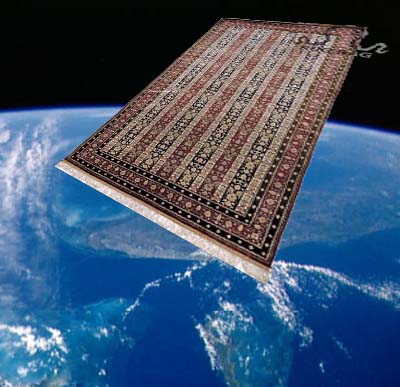
Flying Carpet


Slow as ice forming in the bay, the streets around Petoskey give up their double lining of parked cars by the end of the fall color season.  Arctic winds off Lake Michigan slam doors shut, and scatter dead leaves across the brick streets.  As cemetery-gray clouds pile over the water, “closed for the season” signs appear in store windows.  Sooner or later, cars track new snow, and one day the mountainous spray over the channel light abruptly stops and ice brings more quiet--human quiet, then nature’s quiet.  The town and bay finally stand silenced, two geometries blocked in by jagged ice fields until the Spring thaw.
In this quiet place, local news becomes important.  The town paper reports the first hunter to fall out of his tree stand and the first ice fisherman to go through the ice.  A boon for the economy, people cheer the first day of ski season. Around town old friends meet for lunch, and hang their coats on familiar hooks.  Resized for winter, everyone slows their pace, and settles in.  Those lucky enough to share their life with someone they love move closer to each other in bed.  Compared to Cairo, Rozeta would find this setting distant as a remote planet, but she would also notice familiar signs of squalor and poverty.
At age thirty-one, Rozetta had never traveled beyond Egypt; she had never flown in an airplane; her exposure to televisions and computers limited to the classroom or library.  Now thanks to the assistance of her benefactor who contacted an overseas recruitment firm on her behalf, she embarked for America to begin her residency in general surgery, one step away from becoming a cardiac surgeon. As she stepped onto the plane, she sent a silent prayer of lovingkindness to her benefactor:
May you be happy.
May you be peaceful.
After recovering from the excitement of the takeoff, she slept.  When her eyes opened, she was over the Atlantic.  Amazed she had dozed so long, she felt like she had either done something wrong, or failed to do something.  Her feet felt pleasantly warm.  Dressed in slacks and stockings, she had slept sideways in her window seat with her long legs and feet draped over the middle seat.  As she slowly opened her eyes, she was mortified.  Her feet had slipped under the rump of a handsome young man sitting in the aisle seat.  She quickly closed her eyes again, and slowly drew her feet away, then turned to sit upright.  Keeping her head straight forward, she slanted her eyes sideways.  The young man kept reading a book, and gave no signs of disturbance.  He did appear to have just the slightest hint of amusement on his face.
Rozeta wanted to use the bathroom, but could not imagine climbing over this stranger whose space she had so rudely violated.  Her feet were now cold. She reached into her bag, and pulled out a sweater, slippers, and a blank notebook.  She began writing busily to deflect any further contact with her seat mate. These were the first lines of her American journal:
“I am writing this on my flying carpet to America.  My writing is better than my speaking.  Soon I will develop perfect English as lovely as my Arabic. The two letter “Z”’s  in my new name, “Zizi,” will represent the old me and the new me. Shaped like a zigzag, the “Z” letters represent the zigzag journey that is my life.   I am Arab and Christian.  I am a North African and will be Arab American.  I can hurt and be hurt by people.  I can heal and be healed.  As an Egyptian, I will let go of some things, and hold on to others.  I will be the same, but not the same.  I am worried, but I know my family up in Heaven watches over me.  They smile at me, and I smile back.  I thank God I am alive, but so sorry to be without my family.  From my airplane window, I sigh for the beauty outside me and inside me.  I am so embarrassed about where I placed my feet!”
As the plane lowered to final descent in Detroit, Rozeta looked down upon a dismal cityscape with abandoned factories and warehouses surrounded by vacant parking lots, train stations without trains, dingy houses and schools.  Her first glance at America reminded her of the garbage city of her childhood.  “This cannot be America,” she thought, “America cannot be like Egypt.  I want everything to be clean and pretty and safe.”  The young man watched her look out the window, and observed the sad expression on her face.
“Detroit is waiting for better days--almost dragged herself off the map, but she’ll drag herself back....”  The first words she heard from an American expressed an American value uncommon in Egypt:  optimism.
She faced the young man and announced, “My name is Zizi.”  With this simple reply, she introduced her new American name.  They engaged in some chatter, and Zizi was pleased.
 After clearing immigration and customs, she stepped into the Detroit Metro Airport.  She looked around her for signs of America.  Everyone seemed to be alone, talking into headsets while pacing up and down, left and right, tapping on laptops and cell phones.  They were connected to all kinds of contraptions, but not connected to each other. She walked in and out of one-way conversations, as she searched for her next gate.  The building looked as sterile as a hospital, and just as uncomfortable.  The black and chrome lounge seats appeared too cold to touch.  The smells of fried food filled the long terminal complex.  The only animation came from children who looked like they were in charge--running around like demons, shouting at their parents, throwing food wrappers at each other, whining and crying.  People were slurping straws from large plastic containers like a cartoon movie she had once seen.  At one point, she heard the comforting sound of Arabic music playing through someone’s head phones.
Zizi boarded a small plane for Pellston, Michigan.  Airborne, she looked out on a half-lit landscape thick with snow.  She shivered.  From the plane window, she saw a vast Sahara of ice and snow, uncluttered, covered over, as pristine as the first day of earth.  The plane shook in the wind.  When she observed ice shanties dotting the inland lakes, she thought they were houses, about the size of her cardboard shack in the Cairo dump.  
For the first time, Zizi thought deeply about healing...healing herself.  Could this cold new place possibly be a healing place for the miseries and agitated gloom of her childhood, a place she could live peacefully?  Could there be a ground of compassion and love under all that snow? Had she suffered too long to soften her heart?  Would she move to safety beyond her daily fight for survival?  She hoped the pearl stars whirling above her would spin a healing web for her.  As evening faded into night, the flickering ground lights became sparse as the plane flew northwest.  She turned the prayer for her benefactor to a prayer for herself:
May I be peaceful.
May I be happy.
Rozeta walked down the air stairs, across the tarmac, and into the terminal filled with life-size mounts of large animals.  She imagined bearish creatures lurking outside the terminal, ready to haul her into the woods. After she claimed her bag, she asked a security officer where she might connect to the train station.  When she saw his puzzled face, she thought the last train had left for the night.  
“Excuse me, please, when did the last train leave for Petoskey?” she said.
“About fifty years ago,” he replied.
He kindly helped her call a taxi. She walked out into the northern landscape with hesitating steps. When she arrived in her hotel room, a letter from the hospital outlined her orientation program, and other information about her general surgery residency.  On her first day, she would receive an ID badge, parking permits, computer access, and an introduction to the organization and hospital layout.  One big problem.  Rozeta had no car, no driver’s license, and had never driven a car.  Her only automobile-related possession--the silver and turquoise key chain from her benefactor.
Over the next two weeks, Zizi spent after hours looking for an apartment. She needed a place within walking distance of the hospital.  Through an ad in the paper, she found a loft apartment in downtown Petoskey.  Built in 1900, the building stood on Mitchell Street in the heart of the downtown area where about seventy-five other people rented on the second floors of old downtown buildings.  Zizi could walk down to the Bear River, cross a bridge and walk into the hospital within fifteen minutes.  Within a few weeks, she began driving lessons with an older gentleman named “Tall Bob.”  She couldn’t wait to complete the program, get a license, and take her driver’s test.  Her benefactor’s checks stopped after she graduated from medical school, so she set aside as much as she could to save for a car. 
“Dr. Zahra” immersed herself in learning how to be effective in her work environment.  She memorized the first and last names of patients, doctors, administrators, and nurses each day after work.  She met everyone on the support staff--the clergy, social workers, physical therapists, cafeteria workers, and volunteers in the gift shop.  She accepted advice from the senior staff willingly, and listened to her co-workers on the surgical team.  Zizi treated everyone with respect, and developed a reputation for maintaining the strictest privacy in all her interactions. Still wary of strangers, she slowly began to trust others, and started to feel more safe.  Limiting her self-disclosure, she opened up enough to maintain her new relationships, just a crack.
Men were a problem.  She had never had a serious relationship with a man, and her cultural background led her to believe that she was irreparably damaged by what she regarded as “her shame.”  Her female friends were largely single, and wanted to talk about dating.  Zizi listened, but kept her personal window all but shut.  Like Victoria and Mikage, two women she would soon meet, she had good reasons to believe men were pigs.  But it really didn’t matter whether or not men were good or bad. She remained fixed on nothing but survival--no room for much else.
In the cafeteria one day, Charlene, a new friend, suggested she get out more.
“There’s a benefit supper on Friday night up near Pellston.”
“To benefit what?”
“There’s a man who needs a new kidney...has no health benefits.”
“How can people not have health benefits in America?”
“Way it is...you want to go with?”
“Do I need to wear something?”
“Yes, you should wear clothes, silly.”
“Is it safe up there?”
“Stick with me...I’ll keep you safe.”
“Okay...but it’s no place for me if there are bears around?”
“No bears...promise.”
“Where is it again?”
“Across from Moose Jaw Junction.”
“Moose, jaws, a junction for mooses?”
“No moose...it’s a bar.”
“Okay.”
Charlene picked Zizi up outside her apartment on Friday evening, and drove north towards Pellston.  In the dimming sky, three deer abruptly crossed in front of the car, confirming Zizi’s sense of danger, never entirely absent.  Walking into the meeting hall from the parking lot, Zizi looked over her shoulder, keeping a sharp look-out for wild animals.  Unaware of the real danger waiting inside the hall, she was about to be captured by Nick Randall, a man that she would find difficult to out talk, out walk, or out run.